PianoLIT icon
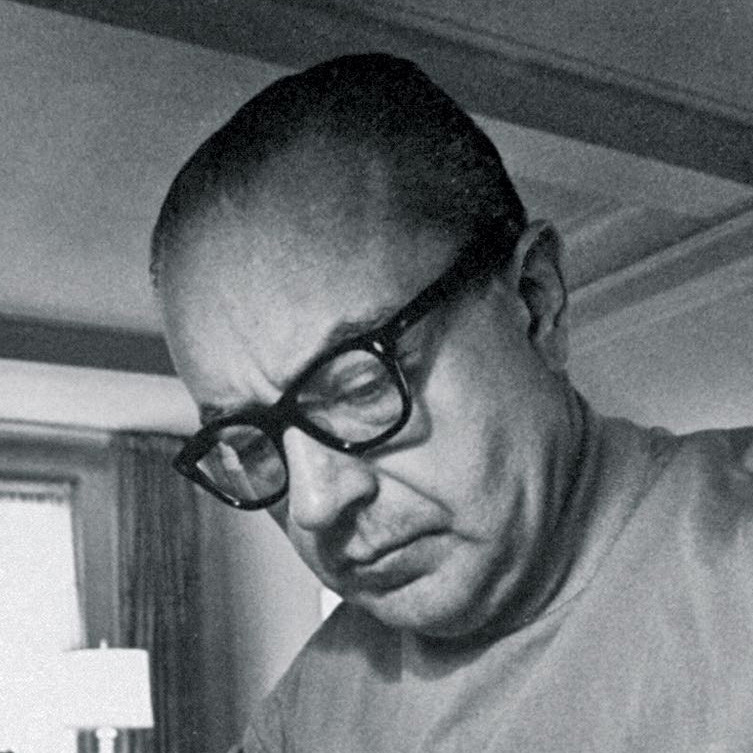
Portrait of Alberto Ginastera

Alberto Ginastera

Apr 11, 1916 - Jun 25, 1983

Argentina

Alberto Ginastera is known as one of the most important classical composers from Latin America. He divided his music into three main periods, which he named "Objective Nationalism" from 1934 to 1948, "Subjective Nationalism" from 1948 to 1958, and "Neo-Expressionism" from 1958 to 1983. These periods mark how his musical style changed over time while keeping a connection to his Argentine roots. Each period shows different ways he included traditional Argentine music in his compositions. The music from his Objective Nationalism period often uses Argentine folk themes in a clear and straightforward way. In contrast, the pieces from his later periods show traditional elements in more hidden or abstract forms. This means that the influence of Argentina’s music can be more subtle or mixed with other sounds. These changes in style show how Ginastera explored and reshaped his national musical language. A big inspiration for much of Ginastera’s music was the Gauchesco tradition. This tradition focuses on the Gaucho, who is a native horseman of the Argentine plains without land. The Gaucho is an important symbol in Argentina and represents the country’s culture and history. This theme appears throughout his works and connects his music to Argentine identity.

What was the world like

Alberto Ginastera was born

Beginning of the composer’s lifetime.

Treaty of Versailles

The Treaty of Versailles was a peace treaty signed on 28 June 1919. As the most important treaty of World War I, it ended the state of war between Germany and most of the Allied Powers. It was signed in the Palace of Ver...

Sources & credits Wikipedia · Wikidata (CC0); Wikipedia contributors (CC BY-SA 4.0). Text may be edited by PianoLIT.
Image · David Lloyd George, Woodrow Wilson and Georges Clemenceau Auckland War Memorial Museum Tāmaki Paenga Hira · Public domain
Japanese invasion of Manchuria

The Empire of Japan's Kwantung Army invaded the Manchuria region of China on 18 September 1931, immediately following the Mukden incident, a false flag event staged by Japanese military personnel as a pretext to invade....

Sources & credits Wikipedia · Wikidata (CC0); Wikipedia contributors (CC BY-SA 4.0). Text may be edited by PianoLIT.
Image · Osaka Mainichi war cameramen World War II database, original: Japanese troops entering Tsitsihar. · Public domain
Second Italo-Ethiopian War

The Second Italo-Ethiopian War, also referred to as the Second Italo-Abyssinian War, was a war of aggression waged by Italy against Ethiopia, which lasted from October 1935 to May 1936. In Ethiopia it is often referred t...

Sources & credits Wikipedia · Wikidata (CC0); Wikipedia contributors (CC BY-SA 4.0). Text may be edited by PianoLIT.
Image · Unknown authorUnknown author https://www.ilcornodafrica.it/passo-uarieu/ · CC BY-SA 4.0
Battle of Stalingrad

The Battle of Stalingrad was a major battle on the Eastern Front of World War II in which Nazi Germany and its Axis allies fought the Soviet Union for control of the city of Stalingrad in southern Russia. Marked by inten...

Sources & credits Wikipedia · Wikidata (CC0); Wikipedia contributors (CC BY-SA 4.0). Text may be edited by PianoLIT.
Image · Unknown authorUnknown author http://aloban75.livejournal.com/564228.html · Public domain
Treaty of San Francisco

The Treaty of San Francisco, also called the Treaty of Peace with Japan, re-established peaceful relations between Japan and the Allies on behalf of the United Nations by ending the legal state of war, military occupatio...

Sources & credits Wikipedia · Wikidata (CC0); Wikipedia contributors (CC BY-SA 4.0). Text may be edited by PianoLIT.
Image · Unknown authorUnknown author 1. [1] · Public domain
Solaris was published

Solaris is a 1961 science fiction novel by Polish writer Stanisław Lem. It follows a crew of scientists on a hovering near-surface research facility as they attempt to understand an extraterrestrial intelligence, which t...

Sources & credits Wikipedia · Wikidata (CC0); Wikipedia contributors (CC BY-SA 4.0). Text may be edited by PianoLIT.
Iranian Revolution

The Iranian Revolution, also known as the Islamic Revolution, culminated in the overthrow of the Pahlavi dynasty in 1979. The revolution led to the replacement of the Imperial State of Iran by the Islamic Republic of Ira...

Sources & credits Wikipedia · Wikidata (CC0); Wikipedia contributors (CC BY-SA 4.0). Text may be edited by PianoLIT.
Image · Unknown authorUnknown author Transferred from en.wikipedia to Commons by Tran_Quoc123 using CommonsHelper. · GFDL
Samuel Barber died

Samuel Osmond Barber II was an American composer, pianist, conductor, baritone, and music educator, and one of the most celebrated composers of the mid-20th century. Principally influenced by nine years' composition stud...

Sources & credits Wikipedia · Wikidata (CC0); Wikipedia contributors (CC BY-SA 4.0). Text may be edited by PianoLIT.
Image · Carl Van Vechten This image is available from the United States Library of Congress's Prints and Photographs division under the digital ID van.5a51697.This tag does not indicate the copyright status of the attached work. A normal copyright tag is still required. See Commons:Licensing. · Public domain
Alberto Ginastera died

End of the composer’s lifetime.