
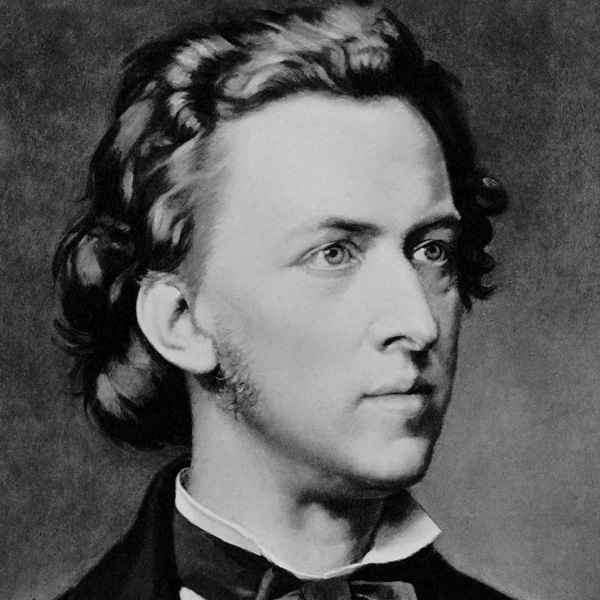
Frédéric Chopin
Did you know?
Chopin liked to play the piano in the dark throughout his entire life. He would often put out the candles in the room, and even when playing at an event or party, he would ask to extinguish the lights. He was shy and only gave around 30 public concerts in his lifetime.
Frédéric François Chopin was a Polish composer and virtuoso pianist of the Romantic era who wrote primarily for solo piano. He is worldwide renown as a leading musician of his era. Chopin grew up in Warsaw, Poland. A child prodigy, he completed his musical education and composed his earlier works in Warsaw before leaving Poland at the age of 20. At 21, he settled in Paris. Thereafter—in the last 18 years of his life—he gave only 30 public performances, preferring the more intimate atmosphere of the salon. He supported himself by selling his compositions and by giving piano lessons, for which he was in high demand. After a failed engagement to Maria Wodzińska from 1836 to 1837, he maintained an often troubled relationship with the French writer Amantine Dupin (known by her pen name, George Sand). A brief and unhappy visit to Majorca with Sand in 1838–39 would prove one of his most productive periods of composition. In his final years, he was supported financially by his admirer Jane Stirling. For most of his life, Chopin was in poor health. He died in Paris in 1849 at the age of 39, probably of tuberculosis. All of Chopin's compositions include the piano. Most are for solo piano, though he also wrote two piano concertos, a few chamber pieces, and some 19 songs set to Polish lyrics. His piano writing was technically demanding and expanded the limits of the instrument. Chopin invented the concept of the instrumental ballade. His major piano works also include mazurkas, waltzes, nocturnes, polonaises, études, impromptus, scherzos, preludes and sonatas, some published only posthumously. His innovations in style, harmony, and musical form, and his association of music with nationalism, were influential throughout and after the late Romantic period.
