PianoLIT icon
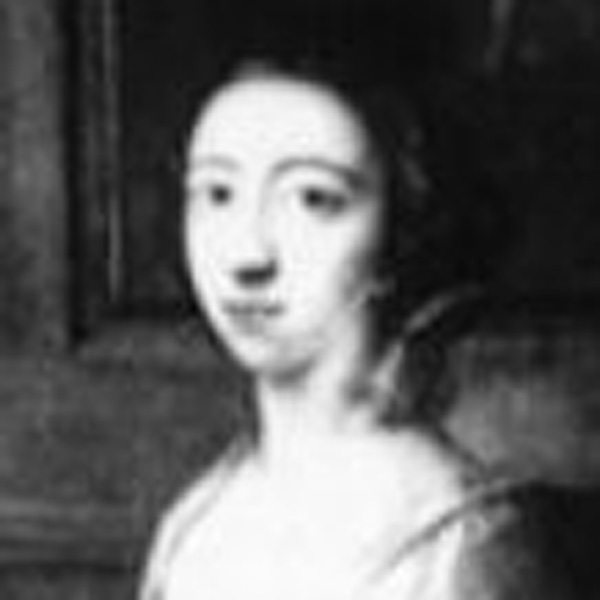
Portrait of Elisabetta de Gambarini

Elisabetta de Gambarini

Sep 7, 1730 - Feb 9, 1765

England

Elisabetta de Gambarini was an English musician and artist active in the 18th century. She was talented in many areas, including singing as a mezzo-soprano, playing the organ, harpsichord, and piano, conducting orchestras, and painting. Her music style fits between the late Baroque and Classical periods. She was known for being skilled in both performing and composing music for different instruments and voice. She is noted for composing music that sounded more like songs than typical instrumental pieces. A significant achievement for her was being the first woman in Britain to publish a collection of keyboard music. Her early works included collections dedicated to important figures, such as the Lady Viscountess Howe and the Prince of Wales. This showed how her reputation grew as she shared and performed her music publicly. Born on September 7, 1730, in Middlesex, England, Elisabetta came from a family with Italian roots; her father was a nobleman from Lucca. Her mother might have been a tutor for nobility, though this is not clearly known. She was the third child out of four but the only one to survive into adulthood. Early in her career, she sang in Handel's oratorios like Occasional Oratorio, Judas Maccabaeus, and Joseph and his Brethren, with her name also linked to Handel’s Samson and Messiah. By 1748, Elisabetta was well recognized and was able to organize her own benefit concert where she performed her compositions, both singing and playing the organ. That same year, she published two volumes of her music. The collections included her well-known "Six Sets of Lessons for the Harpsichord" as well as "Lessons for the Harpsichord Intermix’d with Italian and English Songs." These successes highlight her early and notable contributions to British music as a female composer.

What was the world like

Elisabetta de Gambarini was born

Beginning of the composer’s lifetime.

Manon Lescaut was published

The Story of the Chevalier des Grieux and Manon Lescaut is a novel by Antoine François Prévost. It tells a tragic love story about a nobleman and a common woman. Their decision to live together without marriage is the st...

Sources & credits Wikipedia · Wikidata (CC0); Wikipedia contributors (CC BY-SA 4.0). Text may be edited by PianoLIT.
Image · Abbé Prévost https://gallica.bnf.fr/ark:/12148/btv1b8613367z/f13.image · Public domain
Magnificat in D major, BWV 243 was published

Johann Sebastian Bach's Magnificat, BWV 243, is a musical setting of the biblical canticle Magnificat. It is scored for five vocal parts, and a Baroque orchestra including trumpets and timpani. It is the first major litu...

Sources & credits Wikipedia · Wikidata (CC0); Wikipedia contributors (CC BY-SA 4.0). Text may be edited by PianoLIT.
Image · Johann Sebastian Bach http://resolver.staatsbibliothek-berlin.de/SBB0001C1FD00000003 · Public domain
Sonata in G Minor, K. 30 was published

The Fugue in G minor by Domenico Scarlatti is a single-movement sonata for harpsichord, popularly known as the Cat fugue or Cat's fugue because, according to a legend, Scarlatti was inspired by his cat walking on the har...

Sources & credits Wikipedia · Wikidata (CC0); Wikipedia contributors (CC BY-SA 4.0). Text may be edited by PianoLIT.
Image · Paul Munhoven Own work · CC BY-SA 3.0
Silesian Wars

The Silesian Wars were three wars fought in the mid-18th century between Prussia, under King Frederick the Great, and Habsburg Austria, under Empress Maria Theresa, for control of the Central European region of Silesia,...

Sources & credits Wikipedia · Wikidata (CC0); Wikipedia contributors (CC BY-SA 4.0). Text may be edited by PianoLIT.
Image · Frederick William LongmanCharles Colbeck (editor) The map is taken from "The Public Schools Historical Atlas" by Charles Colbeck. Longmans, Green, & Co.: New York; London; Bombay. 1905. It was accessed through the University of Texas at Austin's Perry-Castañeda Library Map Collection. The original map comes from "Frederick the Great and the Seven Years' War" by Frederick William Longman (1881). · Public domain
Thomas Jefferson was born

Thomas Jefferson was a Founding Father and the third president of the United States, serving from 1801 to 1809. A prolific writer and philosopher, Jefferson was the primary author of the Declaration of Independence. His...

Sources & credits Wikipedia · Wikidata (CC0); Wikipedia contributors (CC BY-SA 4.0). Text may be edited by PianoLIT.
Image · Rembrandt Peale https://www.whitehousehistory.org/galleries/presidential-portraits · Public domain
The Art of Fugue was published

The Art of Fugue, or The Art of the Fugue, BWV 1080, is an incomplete musical work of unspecified instrumentation by Johann Sebastian Bach. Written in the last decade of his life, The Art of Fugue is the culmination of B...

Sources & credits Wikipedia · Wikidata (CC0); Wikipedia contributors (CC BY-SA 4.0). Text may be edited by PianoLIT.
Image · Editor Johann Heinrich Schübler http://imslp.org/wiki/Die_Kunst_der_Fuge,_BWV_1080_(Bach,_Johann_Sebastian) · Public domain
Seven Years' War

The Seven Years' War, 1756 to 1763, was a global war fought by numerous great powers, primarily in Europe, with significant subsidiary campaigns in North America and the Indian subcontinent. The primary warring states we...

Sources & credits Wikipedia · Wikidata (CC0); Wikipedia contributors (CC BY-SA 4.0). Text may be edited by PianoLIT.
Image · Blaue Max Own work · CC BY-SA 4.0
American Revolution

The American Revolution was a political movement in the Thirteen Colonies of Great Britain. It began as a rebellion and turned into a revolution eventually creating the sovereign United States, which was the outcome of t...

Sources & credits Wikipedia · Wikidata (CC0); Wikipedia contributors (CC BY-SA 4.0). Text may be edited by PianoLIT.
Image · John Trumbull US Capitol · Public domain
Elisabetta de Gambarini died

End of the composer’s lifetime.