PianoLIT icon
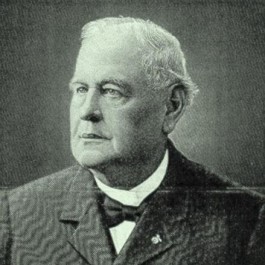
Portrait of William Duncombe

William Duncombe

Jul 22, 1736 - Nov 30, 1818

England

William Duncombe was a composer from England. He is mainly recognized for a small number of piano pieces. These works include a Sonatina in C Major and a piece called Fanfare or Fanfare Minuet. These pieces have stuck around and are still included in collections for teaching piano. Most of Duncombe's piano music likely comes from a larger work called Progressive Lessons. This collection was made for both the harpsichord and pianoforte. It was first published in the year 1778. The pieces used today might be parts taken from this original publication. Even though Duncombe wrote only a few pieces that remain popular, his music is still important for beginners. His compositions help students learn piano skills gradually. Because of this, his name continues to appear in music teaching materials. This shows how his work still has value in music education.

What was the world like

William Duncombe was born

Beginning of the composer’s lifetime.

Sonata in G Minor, K. 30 was published

The Fugue in G minor by Domenico Scarlatti is a single-movement sonata for harpsichord, popularly known as the Cat fugue or Cat's fugue because, according to a legend, Scarlatti was inspired by his cat walking on the har...

Sources & credits Wikipedia · Wikidata (CC0); Wikipedia contributors (CC BY-SA 4.0). Text may be edited by PianoLIT.
Image · Paul Munhoven Own work · CC BY-SA 3.0
Seven Years' War

The Seven Years' War, 1756 to 1763, was a global war fought by numerous great powers, primarily in Europe, with significant subsidiary campaigns in North America and the Indian subcontinent. The primary warring states we...

Sources & credits Wikipedia · Wikidata (CC0); Wikipedia contributors (CC BY-SA 4.0). Text may be edited by PianoLIT.
Image · Blaue Max Own work · CC BY-SA 4.0
American Revolution

The American Revolution was a political movement in the Thirteen Colonies of Great Britain. It began as a rebellion and turned into a revolution eventually creating the sovereign United States, which was the outcome of t...

Sources & credits Wikipedia · Wikidata (CC0); Wikipedia contributors (CC BY-SA 4.0). Text may be edited by PianoLIT.
Image · John Trumbull US Capitol · Public domain
The Barber of Seville was published

The Barber of Seville or the Useless Precaution is a French play by Pierre Beaumarchais, with original music by Antoine-Laurent Baudron. It was initially conceived as an opéra comique, and was rejected as such in 1772 by...

Sources & credits Wikipedia · Wikidata (CC0); Wikipedia contributors (CC BY-SA 4.0). Text may be edited by PianoLIT.
Image · Unknown authorUnknown author Le Barbier de Séville (Paris : Dentu) 1884 · Public domain
Confessions was published

The Confessions is an autobiographical book by Jean-Jacques Rousseau. In the modern era, it is often published with the title The Confessions of Jean-Jacques Rousseau in order to distinguish it from Saint Augustine's Con...

Sources & credits Wikipedia · Wikidata (CC0); Wikipedia contributors (CC BY-SA 4.0). Text may be edited by PianoLIT.
Image · After Maurice Leloir https://www.gutenberg.org/files/3913/3913-h/3913-h.htm · Public domain
Gioachino Rossini was born

Gioachino Antonio Rossini was an Italian composer and conductor of the late Classical and early Romantic eras. While he gained most of his fame for his 39 operas, he also wrote many pieces of chamber music, piano, and so...

Sources & credits Wikipedia · Wikidata (CC0); Wikipedia contributors (CC BY-SA 4.0). Text may be edited by PianoLIT.
Image · uncredited Accademia nazionale di Santa Cecila · Public domain
Sharaku died

Tōshūsai Sharaku was a Japanese ukiyo-e print designer, known for his portraits of kabuki actors. Neither his true name nor the dates of his birth or death are known. His active career as a woodblock artist spanned ten m...

Sources & credits Wikipedia · Wikidata (CC0); Wikipedia contributors (CC BY-SA 4.0). Text may be edited by PianoLIT.
Image · Sharaku Metropolitan Museum of Art · Public domain
French invasion of Russia

The French invasion of Russia, also known as the Russian campaign, the Second Polish War, and in Russia as the Patriotic War of 1812, was initiated by Napoleon with the aim of forcing the Russian Empire to comply with th...

Sources & credits Wikipedia · Wikidata (CC0); Wikipedia contributors (CC BY-SA 4.0). Text may be edited by PianoLIT.
Image · Albrecht Adam http://napoleon1812.wordpress.com/2012/07/page/2/ · Public domain
William Duncombe died

End of the composer’s lifetime.