PianoLIT icon
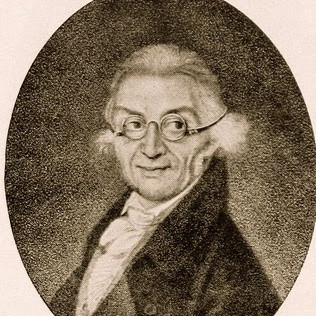
Portrait of Johann Wilhelm Hässler

Johann Wilhelm Hässler

Mar 29, 1747 - Mar 22, 1822

Germany

Johann Wilhelm Hässler was born in Erfurt. He first learned music from his uncle Johann Christian Kittel, who worked as an organist in the city. Around 1762, Hässler took his first professional job as an organist at the Barfüßerkirche local church. After his father passed away in 1769, Hässler took over running the family fur business but still found time to go on concert tours. In the early 1770s, he toured Germany, and in the 1780s and 1790s, he traveled to many places in Europe for music performances. On April 15, 1789, Hässler competed in an organ contest against Wolfgang Amadeus Mozart in Dresden during Mozart's trip to Berlin. While traveling on these tours, Hässler also met other well-known musicians like Johann Nikolaus Forkel, Johann Adam Hiller, Franz Benda, and Carl Philipp Emanuel Bach. These experiences helped Hässler connect with important figures in the music world of his time. From 1790 to 1792, Hässler lived in London. After that, he moved to Saint Petersburg and then settled in Moscow in 1794. In Moscow, he worked as a respected music teacher and composer. He stayed there until he died, making the city his home for the later part of his life.

What was the world like

Johann Wilhelm Hässler was born

Beginning of the composer’s lifetime.

The Art of Fugue was published

The Art of Fugue, or The Art of the Fugue, BWV 1080, is an incomplete musical work of unspecified instrumentation by Johann Sebastian Bach. Written in the last decade of his life, The Art of Fugue is the culmination of B...

Sources & credits Wikipedia · Wikidata (CC0); Wikipedia contributors (CC BY-SA 4.0). Text may be edited by PianoLIT.
Image · Editor Johann Heinrich Schübler http://imslp.org/wiki/Die_Kunst_der_Fuge,_BWV_1080_(Bach,_Johann_Sebastian) · Public domain
Seven Years' War

The Seven Years' War, 1756 to 1763, was a global war fought by numerous great powers, primarily in Europe, with significant subsidiary campaigns in North America and the Indian subcontinent. The primary warring states we...

Sources & credits Wikipedia · Wikidata (CC0); Wikipedia contributors (CC BY-SA 4.0). Text may be edited by PianoLIT.
Image · Blaue Max Own work · CC BY-SA 4.0
American Revolution

The American Revolution was a political movement in the Thirteen Colonies of Great Britain. It began as a rebellion and turned into a revolution eventually creating the sovereign United States, which was the outcome of t...

Sources & credits Wikipedia · Wikidata (CC0); Wikipedia contributors (CC BY-SA 4.0). Text may be edited by PianoLIT.
Image · John Trumbull US Capitol · Public domain
The Barber of Seville was published

The Barber of Seville or the Useless Precaution is a French play by Pierre Beaumarchais, with original music by Antoine-Laurent Baudron. It was initially conceived as an opéra comique, and was rejected as such in 1772 by...

Sources & credits Wikipedia · Wikidata (CC0); Wikipedia contributors (CC BY-SA 4.0). Text may be edited by PianoLIT.
Image · Unknown authorUnknown author Le Barbier de Séville (Paris : Dentu) 1884 · Public domain
Don Giovanni was published

Don Giovanni is an opera in two acts with music by Wolfgang Amadeus Mozart to an Italian libretto by Lorenzo Da Ponte. Its subject is a centuries-old Spanish legend about a libertine, Don Juan, as told by playwright Tirs...

Sources & credits Wikipedia · Wikidata (CC0); Wikipedia contributors (CC BY-SA 4.0). Text may be edited by PianoLIT.
Image · Max Slevogt Google Arts & Culture — fwG9gQnejjlvpQ · Public domain
Serbian Revolution

The Serbian Revolution was a national uprising and constitutional change in Serbia that took place between 1804 and 1835, during which this territory evolved from an Ottoman province into a rebel territory, a constitutio...

Sources & credits Wikipedia · Wikidata (CC0); Wikipedia contributors (CC BY-SA 4.0). Text may be edited by PianoLIT.
Image · Afanasij Scheloumoff 1st version found at Устаници из шанца задивили Европу. · Public domain
Snow White was published

"Snow White" is a German fairy tale, first written down in the early 19th century. The Brothers Grimm published it in 1812 in the first edition of their collection Grimms' Fairy Tales, numbered as Tale 53. The original t...

Sources & credits Wikipedia · Wikidata (CC0); Wikipedia contributors (CC BY-SA 4.0). Text may be edited by PianoLIT.
Image · Image provided by Landsbókasafn Íslands · Public domain
Elements of the Philosophy of Right was published

Elements of the Philosophy of Right is a work by Georg Wilhelm Friedrich Hegel published in 1820, though the book's original title page dates it to 1821. Hegel's most mature statement of his legal, moral, social and poli...

Sources & credits Wikipedia · Wikidata (CC0); Wikipedia contributors (CC BY-SA 4.0). Text may be edited by PianoLIT.
Image · Georg Wilhelm Friedrich Hegel Scan from the original work · Public domain
Johann Wilhelm Hässler died

End of the composer’s lifetime.