
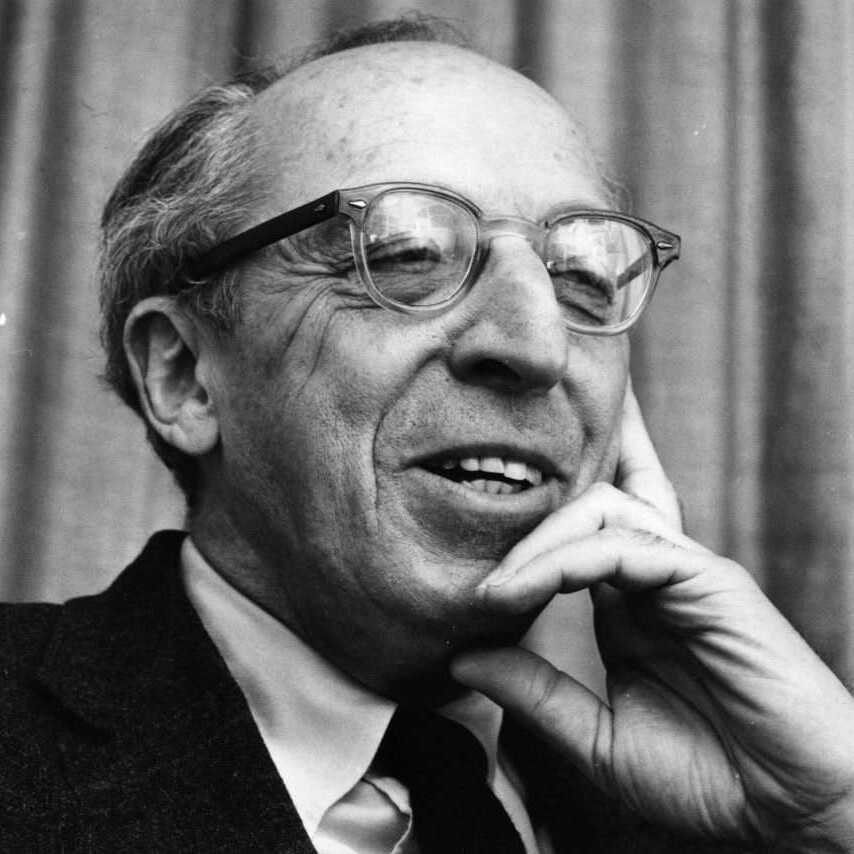
Aaron Copland
Did you know?
Aaron Copland, the "Dean of American Composers," crafted music that embodied the American landscape and pioneer spirit.
Aaron Copland was born in Brooklyn, New York, in 1900 to a Conservative Jewish family of Lithuanian origins. His father, Harris Morris Copland, emigrated from Russia to the United States, possibly anglicizing their surname from "Kaplan" to "Copland." Aaron grew up above his parents' shop and showed an early interest in music. He began composing at a young age and, after attending concerts and hearing his first symphony at 16, decided to become a composer. He received formal music education under Rubin Goldmark and eventually traveled to Paris to study with Nadia Boulanger. In the 1930s, Copland shifted his musical style to be more accessible to a wider audience, composing works like "El Salón México" and "Billy the Kid," which became popular. The 1940s were highly productive for him, producing notable works like "Appalachian Spring," "Fanfare for the Common Man," and "Lincoln Portrait." Copland faced political scrutiny during the Red scare of the 1950s, but his career remained largely intact. In the 1960s, he turned to conducting and continued to contribute to the world of classical music. Copland passed away in 1990, leaving a lasting legacy as a pioneering American composer.
