
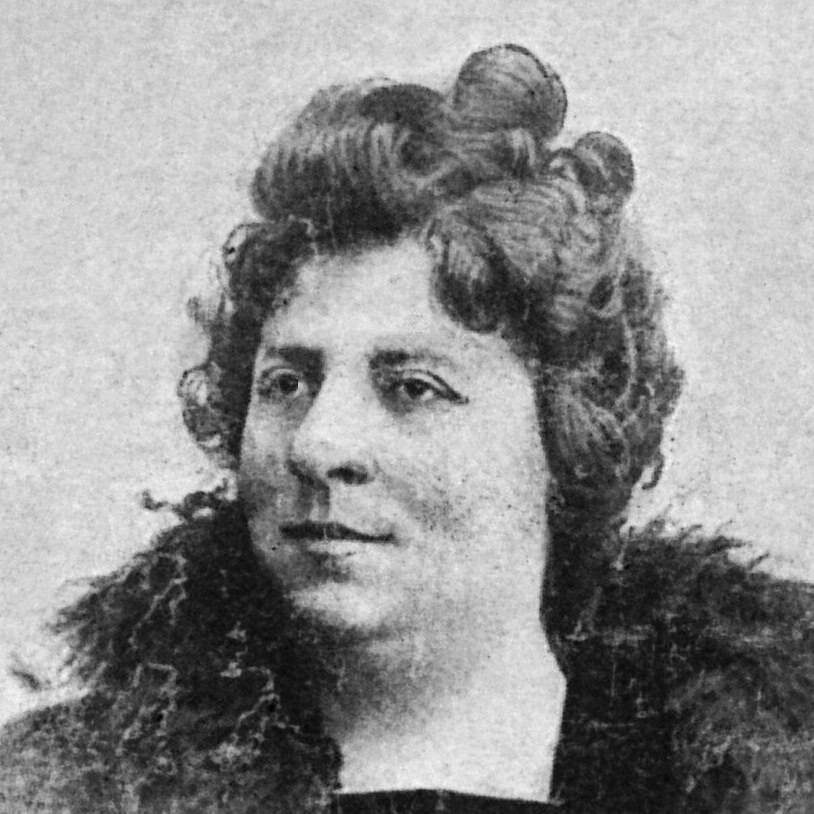
Hedwige Chrétien
Did you know?
The University of Michigan's Women Composers Collection houses one of the most extensive archives of her works.
Hedwige Chrétien, a composer born in Compiègne, had a musical lineage through her maternal grandfather, Jules Ternizien, a professional violinist. Her education at the Paris Conservatoire included instruction from notable figures such as Louise-Aglaé Massart, César Franck, Charles Lenepveu, and Ernest Guiraud. In 1886, she earned recognition from the Society of Composers of Music for her lyric poem, L’Année, and published her Grand Solo for tenor trombone and piano, sparking a lasting interest in wind and brass instruments. Awards in various musical disciplines followed from 1875 onwards. In 1887, Chrétien married fellow student Paolo Gennaro, a flautist, and they had at least two children, Marcel and Cécile, both of whom pursued musical careers. After briefly teaching music theory at the conservatoire, she resigned in 1892 to focus on composition. Over her career, Chrétien composed around 250 works, encompassing chamber pieces, orchestral works, including the lost Oriental Ballet, two comic operas (La Cinquantaine and Le Menuet de l'Impératrice), and a hundred piano pieces. Her interest in the organ resurfaced in 1920, leading to extensive compositions for the instrument. Chrétien's oeuvre also includes more than 70 meticulously crafted mélodies, characterized by a distinctive and assured use of harmony and form. Drawing inspiration from France's medieval past, she left a significant musical legacy, with much of her work archived at the Bibliothèque nationale and the Women Composers Collection at the University of Michigan.
