
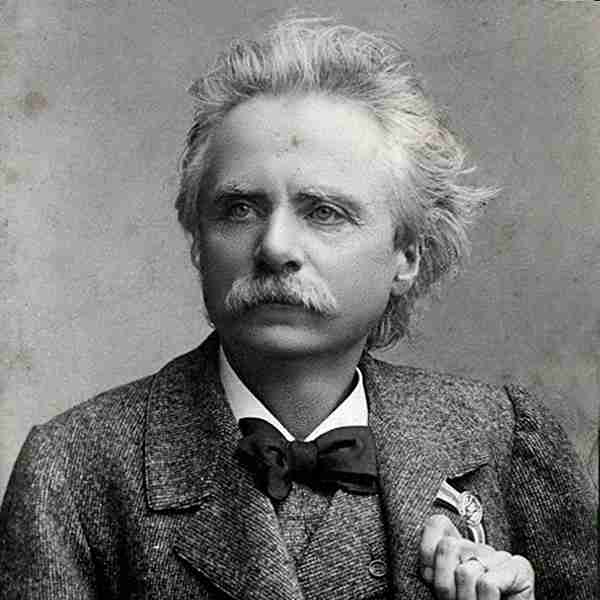
Edvard Grieg
Did you know?
Edvard Grieg was given an honorary degree by Cambridge University in 1894. Straight after the ceremony, he rushed to the post office and sent a telegram to a friend, a physician in Bergen who shared his surname. He signed his telegram ‘Doctor Grieg’.
Edvard Hagerup Grieg was a Norwegian composer and pianist. He is widely considered one of the leading Romantic era composers, and his music is part of the standard classical repertoire worldwide. His use and development of Norwegian folk music in his own compositions brought the music of Norway to international consciousness, as well as helping to develop a national identity, much as Jean Sibelius and Bedřich Smetana did in Finland and Bohemia, respectively. Grieg is the most celebrated person from the city of Bergen, with numerous statues depicting his image, and many cultural entities named after him: the city's largest concert building (Grieg Hall), its most advanced music school (Grieg Academy) and its professional choir (Edvard Grieg Kor). The Edvard Grieg Museum at Grieg's former home, Troldhaugen, is dedicated to his legacy. Rooted in the national folk tradition of Norway, Grieg’s music is noted for a refined lyrical sense. Between 1867 and 1901 he wrote ten collections of Lyric Pieces for piano. His spirited rhythms often have a folk song association. His harmonies, developed from the late Romantic style, were considered novel. Among his most popular works, are his incidental music to Peer Gynt, Opus 23, and the suite Holberg, Opus 40. His arrangements of Norwegian dances and songs, Opus 17 and Opus 66, and especially his Slåtter, Norwegian Peasant Dances, Opus 72, show his characteristic sense of rhythm and harmony. Intuitively, he identified himself with the poet’s imagery in these songs and discovered its musical equivalent.
