
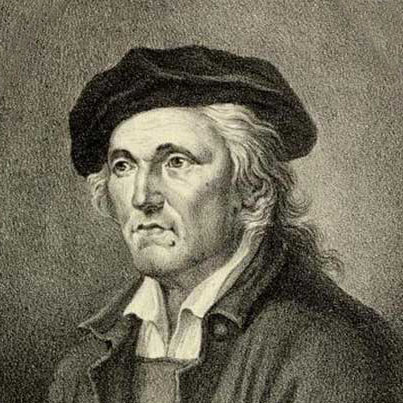
Johann Kirnberger
Did you know?
Kirnberger developed well-tempered tuning systems "Kirnberger II" and "Kirnberger III," and a rational version of equal temperament.
Johann Philipp Kirnberger was a composer and music theorist. He studied the organ with Johann Peter Kellner and Heinrich Nicolaus Gerber, and the violin with Meil in Sondershausen. Most notably, he studied performance and composition with Johann Sebastian Bach from 1739 to 1741. From 1741 to 1751, Kirnberger worked in Poland for several magnates and at the Benedictine Cloister in Lviv, where he collected Polish national dances and compiled them in his treatise, *Die Charaktere der Tänze*. In 1751, he became a violinist at the court of Frederick the Great and later served as music director to the Prussian Princess Anna Amalia until his death. Kirnberger was a devoted admirer of J.S. Bach, publishing Bach's *Clavierübungen* and preserving many of his manuscripts. He is renowned for his theoretical work *Die Kunst des reinen Satzes in der Musik* and for developing well-tempered tuning systems, including "Kirnberger II" and "Kirnberger III." One of his notable compositions is the Fuga in C-dur für Orgel, initially attributed to J.S. Bach and later to his son, Carl Philipp Emanuel Bach.
