
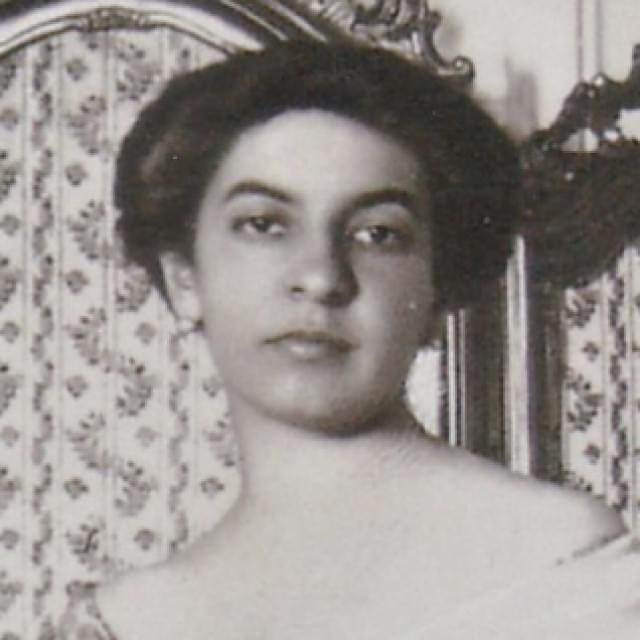
Dora Pejačević
Did you know?
During World War I, Dora served as a paramedic, which profoundly impacted her music.
Dora Pejačević, born in Budapest to a noble family of Bulgarian origin, defied aristocratic expectations to pursue a career in music, inspired by her mother's musical talents. While residing in Našice and traveling to cities like Vienna and Munich, she immersed herself in literature, philosophy, and social issues. A self-taught composer, Pejačević was influenced by prominent figures of her time, including Rainer Maria Rilke and Karl Kraus. In 1913, she composed a piano concerto, becoming the first Croatian composer to do so. Her music transitioned from romantic to impressionistic and expressionistic styles, reflecting the tumultuous World War I era. As she served as a paramedic during the war, her compositions evolved to feature texts by Kraus, Rilke, and Nietzsche. Tragically, Pejačević passed away in 1923 after childbirth. She is celebrated as a significant Croatian composer, known for her Symphony in F-sharp minor, considered the first modern Croatian symphony. Efforts are underway to publish and promote her extensive catalog of compositions, and her work has gained recognition on the international stage, including at the 2023 BBC Proms in London. Her life also inspired the Croatian film "Countess Dora" in 1993.
