PianoLIT icon
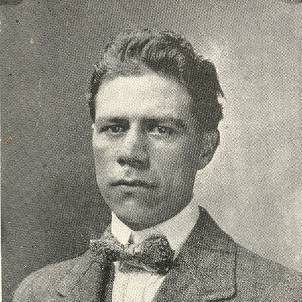
Portrait of Luis Antonio Calvo

Luis Antonio Calvo

Aug 28, 1882 - Apr 22, 1945

Chile

Luis Antonio Calvo was born on August 28, 1882, in Gámbita, Santander, Colombia. After his father left, he grew up in difficult conditions. Early on, he showed a love for music and learned to play piano with Pedro León Gómez in Tunja. Money was tight, but he joined the Boyacá Department Band where he played different instruments. During this time, he wrote his first important piece called "Livia." In 1905, Calvo and his family moved to Bogotá looking for better financial opportunities. He had a hard time and joined the army. At first, he struggled to get a scholarship to study music, but his hard work and talent helped him get into the music academy. There, he studied with Guillermo Uribe Holguín and improved his skills. Sadly, in 1916, he was diagnosed with leprosy. Despite this illness, he kept composing music while living in the leper colony of Agua de Dios until he died on April 22, 1945. Luis Antonio Calvo's life shows how he faced many challenges but still reached musical success. From his early struggles through his fight with disease, he stayed committed to music. He left behind an important musical heritage that reflects his strength and dedication to his art.

What was the world like

Luis Antonio Calvo was born

Beginning of the composer’s lifetime.

The Picture of Dorian Gray was published

The Picture of Dorian Gray is an 1890 philosophical fiction and Gothic horror novel by Irish author Oscar Wilde. A shorter novella-length version was published in the July 1890 issue of the American periodical Lippincott...

Sources & credits Wikipedia · Wikidata (CC0); Wikipedia contributors (CC BY-SA 4.0). Text may be edited by PianoLIT.
Image · Unknown authorUnknown author From part one of The Elmer Holmes Bobst Library's online exhibition: Reading Wilde, "Querying Spaces: An Exhibition Commemorating the 100th Anniversary of the Trials of Oscar Wilde"; plus direct link to image · Public domain
Triple Entente

The Triple Entente describes the informal mutual arrangement and understanding between the Russian Empire, the French Third Republic, and the United Kingdom of Great Britain and Ireland. It was built upon the Franco-Russ...

Sources & credits Wikipedia · Wikidata (CC0); Wikipedia contributors (CC BY-SA 4.0). Text may be edited by PianoLIT.
Image · historicair (French original) Fluteflute & User:Bibi Saint-Pol (English translation) Translated in English from French SVG Map_Europe_alliances_1914-fr.svg · CC BY-SA 2.5
The First Men in the Moon was published

The First Men in the Moon by the English author H. G. Wells is a science fiction novel about a journey to the Moon by two Englishmen who discover that a sophisticated extraterrestrial civilisation of insect-like creature...

Sources & credits Wikipedia · Wikidata (CC0); Wikipedia contributors (CC BY-SA 4.0). Text may be edited by PianoLIT.
Image · Public domain
The Phantom of the Opera was published

The Phantom of the Opera is a Gothic horror novel by French author Gaston Leroux. It was first published as a serial in Le Gaulois from 23 September 1909 to 8 January 1910, and was released in volume form in late March 1...

Sources & credits Wikipedia · Wikidata (CC0); Wikipedia contributors (CC BY-SA 4.0). Text may be edited by PianoLIT.
Image · André Castaigne http://litteranet.blogspot.fr/2010/11/le-fantome-de-lopera-lhydre-au-destin.html · Public domain
Treaty of Versailles

The Treaty of Versailles was a peace treaty signed on 28 June 1919. As the most important treaty of World War I, it ended the state of war between Germany and most of the Allied Powers. It was signed in the Palace of Ver...

Sources & credits Wikipedia · Wikidata (CC0); Wikipedia contributors (CC BY-SA 4.0). Text may be edited by PianoLIT.
Image · David Lloyd George, Woodrow Wilson and Georges Clemenceau Auckland War Memorial Museum Tāmaki Paenga Hira · Public domain
Japanese invasion of Manchuria

The Empire of Japan's Kwantung Army invaded the Manchuria region of China on 18 September 1931, immediately following the Mukden incident, a false flag event staged by Japanese military personnel as a pretext to invade....

Sources & credits Wikipedia · Wikidata (CC0); Wikipedia contributors (CC BY-SA 4.0). Text may be edited by PianoLIT.
Image · Osaka Mainichi war cameramen World War II database, original: Japanese troops entering Tsitsihar. · Public domain
Second Italo-Ethiopian War

The Second Italo-Ethiopian War, also referred to as the Second Italo-Abyssinian War, was a war of aggression waged by Italy against Ethiopia, which lasted from October 1935 to May 1936. In Ethiopia it is often referred t...

Sources & credits Wikipedia · Wikidata (CC0); Wikipedia contributors (CC BY-SA 4.0). Text may be edited by PianoLIT.
Image · Unknown authorUnknown author https://www.ilcornodafrica.it/passo-uarieu/ · CC BY-SA 4.0
Battle of Stalingrad

The Battle of Stalingrad was a major battle on the Eastern Front of World War II in which Nazi Germany and its Axis allies fought the Soviet Union for control of the city of Stalingrad in southern Russia. Marked by inten...

Sources & credits Wikipedia · Wikidata (CC0); Wikipedia contributors (CC BY-SA 4.0). Text may be edited by PianoLIT.
Image · Unknown authorUnknown author http://aloban75.livejournal.com/564228.html · Public domain
Luis Antonio Calvo died

End of the composer’s lifetime.