
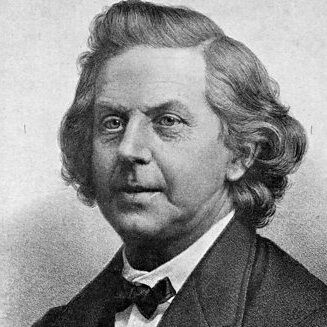
Niels Gade
Did you know?
Gade was a mentor to Edward Grieg and known for his nationalist music rooted in Danish folklore.
Niels Gade, born in Copenhagen to a family of artisans, initially trained to follow his father's trade. However, his natural talent and passion for music led him to pursue a career as a musician. Despite being primarily self-taught, Gade's proficiency on the violin and his grasp of musical theory caught the attention of notable figures like Frederik Wexschall, Christoph Weyse, and Andreas Berggreen. His early compositions, such as the concert overture "Echoes of Ossian," demonstrated his emerging talent. Gade's career flourished as he gained recognition both in Denmark and abroad. His association with luminaries like Felix Mendelssohn and Robert Schumann further elevated his standing in the musical world. Conducting premieres of Mendelssohn's works and developing friendships with Schumann and other prominent composers marked significant milestones in his career. Despite disruptions caused by war, such as his return to Copenhagen during the Prussian-Danish conflict, Gade continued to advance his musical pursuits and became a pivotal figure in Danish music. Beyond his accomplishments as a composer and conductor, Gade played a crucial role in nurturing the next generation of Scandinavian composers. He taught and mentored notable figures like Edvard Grieg and Carl Nielsen, leaving a lasting legacy on Nordic music. Gade's compositions, ranging from symphonies to chamber music, often drew inspiration from Danish folklore, contributing to the burgeoning Romantic nationalism movement in music. Despite personal tragedies, including the loss of his first wife and children, Gade's dedication to music remained unwavering until his death in 1890, leaving behind a rich musical heritage.
