
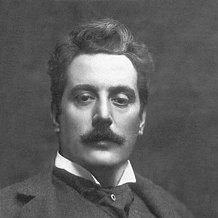
Giacomo Puccini
Did you know?
Puccini was an avid car enthusiast and nearly died in a crash in 1903, delaying the completion of Madama Butterfly.
Giacomo Puccini was one of Italy’s greatest opera composers, often seen as the natural successor to Verdi. He initially followed the Romantic tradition but later embraced verismo, a style emphasizing realism and raw emotion. His early works, Le Villi and Edgar, gained him recognition, but it was Manon Lescaut (1893) that established his reputation. This success led to a collaboration with librettists Luigi Illica and Giuseppe Giacosa, resulting in La bohème (1896), Tosca (1900), and Madama Butterfly (1904)—operas that remain central to the repertoire today. Despite initial struggles, Puccini’s operas became internationally celebrated for their soaring melodies, dramatic intensity, and orchestral richness. La fanciulla del West (1910) showcased his evolving harmonic language, while Il trittico (1918) demonstrated his versatility with a tragic, sentimental, and comedic opera in one evening. His final work, Turandot, left unfinished at his death, contains the famous aria Nessun dorma and was later completed by Franco Alfano. Puccini's music combined Italian lyricism with innovative harmonies and orchestration, influencing generations of composers. Though critics sometimes dismissed his populist appeal, his operas have remained some of the most performed worldwide. His legacy lives on through annual festivals in his hometown of Lucca and Torre del Lago, where he found inspiration for much of his music.
