Adolf von Henselt was born
Beginning of the composer’s lifetime.

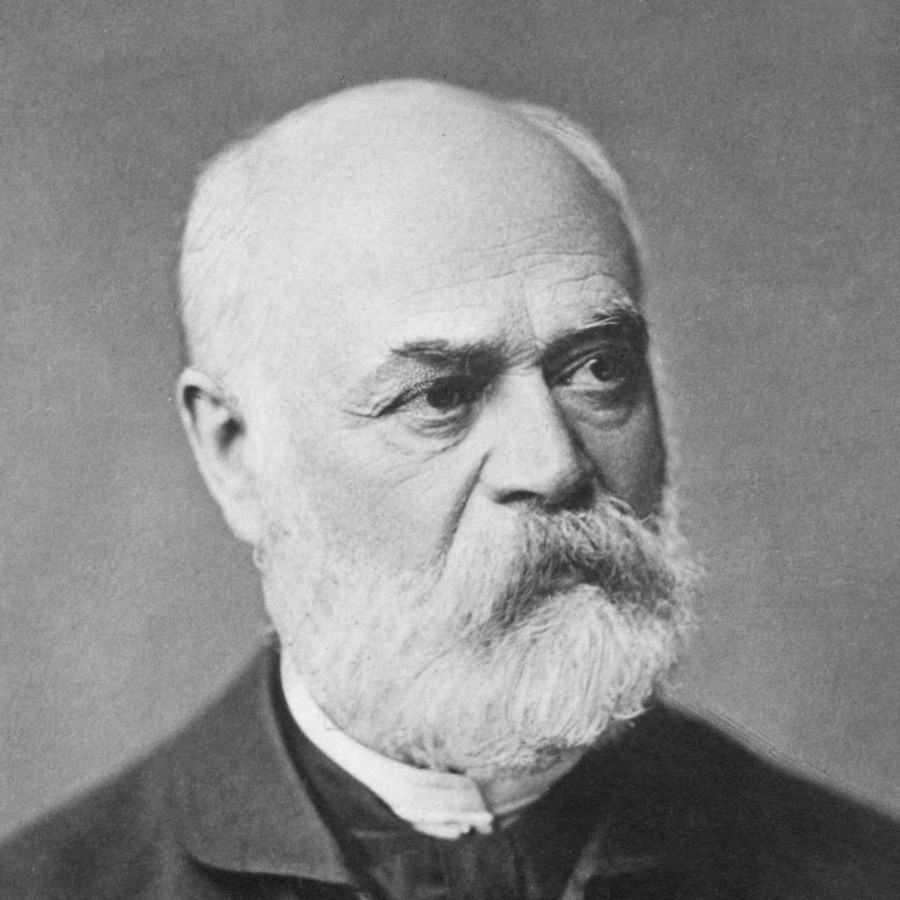
Beginning of the composer’s lifetime.

Harriet Tubman (born Araminta Ross, c. March 1822 – March 10, 1913) was an American abolitionist and social activist. After escaping slavery, Tubman made some 13 missions to rescue approximately 70 enslaved people, including her family and friends, using the network of antislavery activists and safe houses known collectively as the Underground Railroad. During the American Civil War, she served as an armed scout and spy for the Union Army. In her later years, Tubman was an activist in the movement for women's suffrage.

Ignaz (Ignace) Joseph Pleyel (French: [plɛjɛl]; German: [ˈplaɪl̩]; 18 June 1757 – 14 November 1831) was an Austrian composer, music publisher and piano builder of the Classical period. He grew up in Austria (then part of the Holy Roman Empire), and was educated there; in his mid-twenties he moved to France, and was based in France for the rest of his life.

The Mexican–American War, also known in the United States as the Mexican War and in Mexico as the United States intervention in Mexico, (April 25, 1846 – February 2, 1848) was an invasion of Mexico by the United States. It followed the 1845 American annexation of Texas, which Mexico still considered its territory because it refused to recognize the Treaties of Velasco, signed by President Antonio López de Santa Anna after he was captured by the Texian Army during the 1836 Texas Revolution. The Republic of Texas was de facto an independent country, but most of its Anglo-American citizens who had moved from the United States to Texas after 1822 wanted to be annexed by the United States.

Franklin's lost expedition was a failed British voyage of Arctic exploration led by Captain Sir John Franklin that departed England in 1845 aboard two ships, HMS Erebus and HMS Terror, and was assigned to traverse the last unnavigated sections of the Northwest Passage in the Canadian Arctic and to record magnetic data to help determine whether a better understanding could aid navigation. The expedition met with disaster after both ships and their crews, a total of 129 officers and men, became icebound in Victoria Strait near King William Island in what is today the Canadian territory of Nunavut. After being icebound for more than a year, Erebus and Terror were abandoned in April 1848, by which point two dozen men, including Franklin, had died. The survivors, now led by Franklin's second-in-command, Francis Crozier, and Erebus's captain, James Fitzjames, set out for the Canadian mainland and disappeared, presumably having perished.

The Taiping Rebellion (1850–1864) was a civil war in late imperial China fought between the ruling Qing dynasty and the rebelling Taiping Heavenly Kingdom. It was the deadliest civil war in history and the second-deadliest conflict in history overall. Estimates of the war's death toll range from 20–30 million, around 5–10% of the total Chinese population at the time, to 73–100 million, around 25% of the population. The Rebellion is widely considered to be the most important event in 19th-century Chinese history, and although the kingdom was defeated, the victory came at a great cost to the Qing dynasty's economy and political stability.

Les Misérables (, French: [le mizeʁabl] ) is a French epic historical novel by Victor Hugo, first published on 31 March 1862, that is considered one of the greatest novels of the 19th century. Les Misérables has been popularized through numerous adaptations for film, television, and the stage, including a musical.

Through the Looking-Glass, and What Alice Found There is a novel published in December 1871 by Lewis Carroll, the pen name of Charles Lutwidge Dodgson, a mathematics lecturer at Christ Church, Oxford. It is the sequel to his Alice's Adventures in Wonderland (1865), in which many of the characters were anthropomorphic playing cards. In this second novel the theme is chess. As in the earlier book, the central figure, Alice, enters a fantastical world, this time by climbing through a large looking-glass (a mirror) into a world that she can see beyond it. There she finds that, just as in a reflection, things are reversed, including logic (for example, running helps one remain stationary, walking away from something brings one towards it, chessmen are alive and nursery-rhyme characters are real).

Fyodor Mikhailovich Dostoevsky (11 November [O.S. 30 October] 1821 – 9 February [O.S. 28 January] 1881) was a Russian philosopher, novelist, short-story writer, essayist, and journalist. He is regarded as one of the greatest novelists in both Russian and world literature, and many of his works are considered highly influential masterpieces. Dostoevsky's literary works explore the human condition in the troubled political, social and spiritual atmospheres of 19th-century Russia, and engage with a variety of philosophical and religious themes. His most acclaimed novels include Crime and Punishment (1866), The Idiot (1869), Demons (1872), The Adolescent (1875) and The Brothers Karamazov (1880). His Notes from Underground, a novella published in 1864, is considered one of the first works of existentialist literature.
End of the composer’s lifetime.