PianoLIT icon
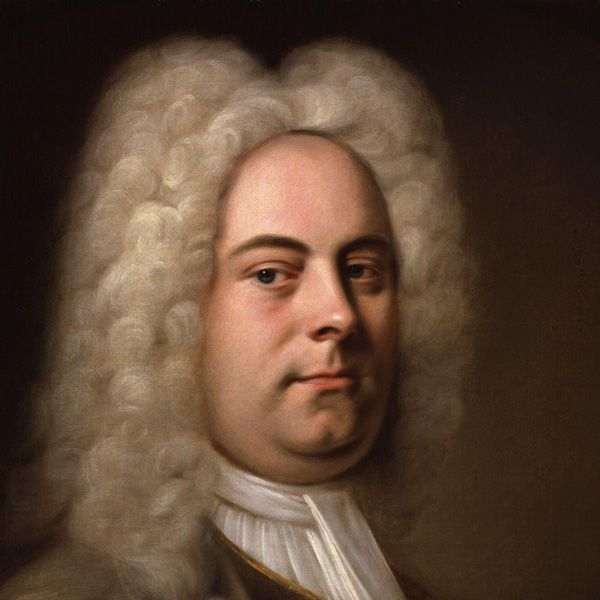
Portrait of George Frideric Handel

George Frideric Handel

Feb 23, 1685 - Apr 20, 1759

Germany

George Frideric Handel was born on February 23, 1685, in Halle, Germany. His mother supported his interest in music, while his father preferred he avoid a career as a musician. After a short time studying law at a local university, Handel moved to Hamburg. There, he worked as a violinist and wrote his first opera, Almira. By 1706, he decided to explore Italy independently. During his travels, he composed religious, secular, and theatrical music for important patrons in cities like Florence, Rome, Naples, and Venice. Handel also met many Italian composers who influenced him, including Arcangelo Corelli and Alessandro Scarlatti. In 1710, Handel returned north and became a music director for the Elector of Hanover. Later that year, he traveled to London where his opera Rinaldo premiered in 1711. Throughout the 1710s, he lived permanently in Britain, writing operas for the Queen’s Theatre, later called the King’s Theatre. He also composed music for the Earl of Carnarvon’s country house, including the masque Acis and Galatea. In 1719, Handel took a leading role at the Royal Academy of Music, which aimed to promote Italian opera in London. Some of his key operas for this company were Radamisto, Giulio Cesare, Tamerlano, andRodelinda. Handel settled in a house on Brook Street in London in 1723, where he lived for the rest of his life. He became a British citizen in 1727 and composed music for King George II’s coronation, including the famous anthem Zadok the Priest. During the 1730s, his work blended Italian operas with English concert music, producing many significant pieces like Orlando, Ariodante, Alcina, and Saul. His last Italian operas, Imeneo and Deidamia, were performed in the 1740–41 season. The 1740s were a busy time for Handel as he composed a variety of works, including biblical oratorios like Samson and Solomon, music dramas based on Greek tragedies, and patriotic pieces like Judas Maccabaeus. However, he faced criticism from parts of English society about his artistic choices. His oratorio Messiah had a warmly received premiere in Dublin but caused controversy when first performed in London. From 1737, Handel experienced serious health problems, including what may have been strokes and lead poisoning. He also suffered from cataracts, becoming blind after several unsuccessful surgeries in his later years.

What was the world like

George Frideric Handel was born

Beginning of the composer’s lifetime.

Third Russo-Turkish War

The Russo-Turkish War of 1686–1700 was part of the joint European effort to confront the Ottoman Empire. The larger European conflict was known as the Great Turkish War. The Russo-Turkish War began after the Tsardom of R...

Sources & credits Wikipedia · Wikidata (CC0); Wikipedia contributors (CC BY-SA 4.0). Text may be edited by PianoLIT.
Image · Adriaan Schoonebeek https://runivers.ru/gal/gallery-all.php?SECTION_ID=7093&ELEMENT_ID=476694 · Public domain
Os Lusíadas was published

Os Lusíadas, usually translated as The Lusiads, is a Portuguese epic poem written by Luís Vaz de Camões and first published in 1572. It is widely regarded as the most important work of Portuguese-language literature and...

Sources & credits Wikipedia · Wikidata (CC0); Wikipedia contributors (CC BY-SA 4.0). Text may be edited by PianoLIT.
Image · Public domain
Qianlong Emperor was born

The Qianlong Emperor, also known by his temple name Emperor Gaozong of Qing, personal name Hongli, was the fifth emperor of the Qing dynasty and the fourth Qing emperor to rule over China proper. He reigned officially fr...

Sources & credits Wikipedia · Wikidata (CC0); Wikipedia contributors (CC BY-SA 4.0). Text may be edited by PianoLIT.
Image · Giuseppe Castiglione https://minghuaji.dpm.org.cn/paint/detail?id=420a006ed10d4e13b1075ba6e780f07a · Public domain
Opera seria was created

Opera seria is an Italian musical term which refers to the noble and "serious" style of Italian opera that predominated in Europe from the 1710s to about 1770. The term itself was rarely used at the time and only attaine...

Sources & credits Wikipedia · Wikidata (CC0); Wikipedia contributors (CC BY-SA 4.0). Text may be edited by PianoLIT.
Image · John Vanderbank http://www.haendel.it/interpreti/old/senesino.htm. · Public domain
Manon Lescaut was published

The Story of the Chevalier des Grieux and Manon Lescaut is a novel by Antoine François Prévost. It tells a tragic love story about a nobleman and a common woman. Their decision to live together without marriage is the st...

Sources & credits Wikipedia · Wikidata (CC0); Wikipedia contributors (CC BY-SA 4.0). Text may be edited by PianoLIT.
Image · Abbé Prévost https://gallica.bnf.fr/ark:/12148/btv1b8613367z/f13.image · Public domain
Sonata in G Minor, K. 30 was published

The Fugue in G minor by Domenico Scarlatti is a single-movement sonata for harpsichord, popularly known as the Cat fugue or Cat's fugue because, according to a legend, Scarlatti was inspired by his cat walking on the har...

Sources & credits Wikipedia · Wikidata (CC0); Wikipedia contributors (CC BY-SA 4.0). Text may be edited by PianoLIT.
Image · Paul Munhoven Own work · CC BY-SA 3.0
The Art of Fugue was published

The Art of Fugue, or The Art of the Fugue, BWV 1080, is an incomplete musical work of unspecified instrumentation by Johann Sebastian Bach. Written in the last decade of his life, The Art of Fugue is the culmination of B...

Sources & credits Wikipedia · Wikidata (CC0); Wikipedia contributors (CC BY-SA 4.0). Text may be edited by PianoLIT.
Image · Editor Johann Heinrich Schübler http://imslp.org/wiki/Die_Kunst_der_Fuge,_BWV_1080_(Bach,_Johann_Sebastian) · Public domain
Seven Years' War

The Seven Years' War, 1756 to 1763, was a global war fought by numerous great powers, primarily in Europe, with significant subsidiary campaigns in North America and the Indian subcontinent. The primary warring states we...

Sources & credits Wikipedia · Wikidata (CC0); Wikipedia contributors (CC BY-SA 4.0). Text may be edited by PianoLIT.
Image · Blaue Max Own work · CC BY-SA 4.0
George Frideric Handel died

End of the composer’s lifetime.