PianoLIT icon
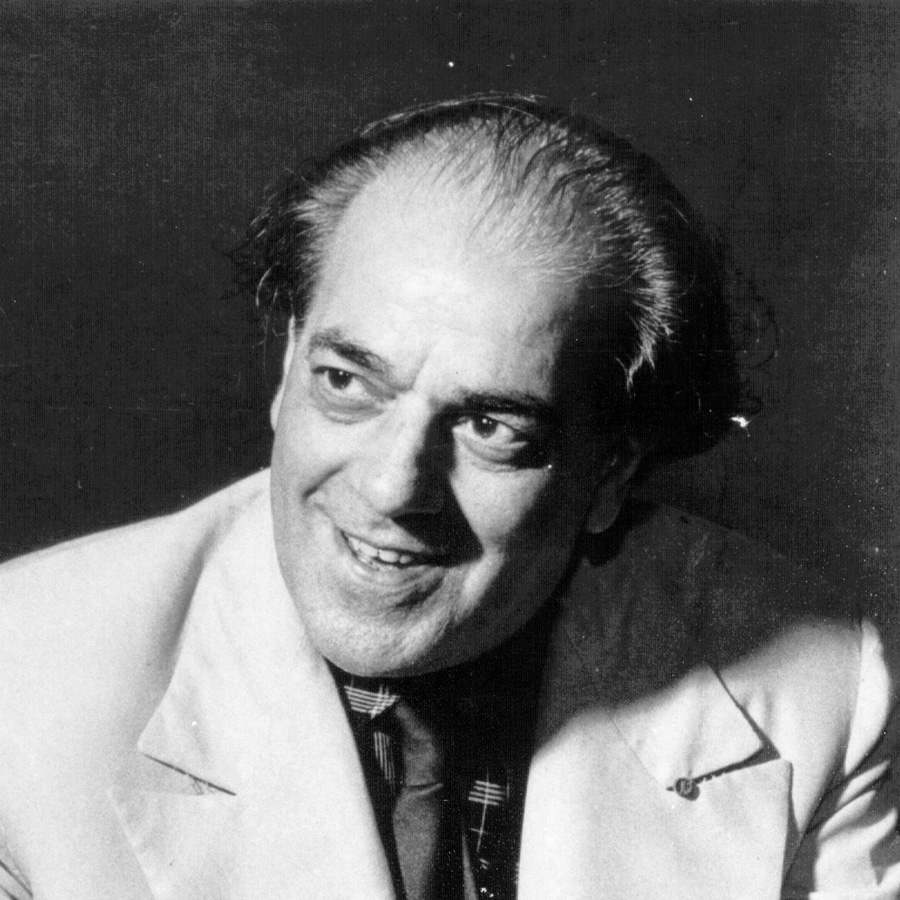
Portrait of Heitor Villa-Lobos

Heitor Villa-Lobos

Mar 5, 1887 - Nov 17, 1959

Brazil

Heitor Villa-Lobos is one of the most famous South American composers in music history. He is known for writing music that shows the many different musical styles and traditions of his homeland, Brazil. Besides composing, he worked to change music education in Brazilian schools to improve it locally. His music often reflects the folklore and cultural influences found throughout Brazil. Villa-Lobos grew up in a musical family that hosted musicians every Saturday, playing music late into the night. His family hoped he would choose medicine instead of music, but he was determined to be a musician. As a child, he practiced cello, clarinet, and guitar, and played music in cafes, on streets, and at parties. Traveling through Brazil as he got older, he absorbed the country's many musical influences, including Portuguese, African, and Amerindian cultures. Beginning to compose at age 14, he mixed these different styles to create new sounds. At 18, he made a risky trip to the Amazon,learning(native)music,whichinfluencedhiswork. His compositions were performed in Brazil but produced mixed reactions. Some people were unsure about the blend of musical styles in his pieces, while others enjoyed them immediately. He married a pianist, Lucilia Guimaraes, and supported himself by playing cello in various orchestras. In his 30s, he moved to Paris, hoping to develop his composing in Europe’s cultural center. There, his music was welcomed, as its bright, unique sound was unlike much European music and fascinated audiences. Later, Villa-Lobos returned to Brazil to impact music education directly. He formed a large choral group in Sao Paulo that included people from all social classes. The government of Rio de Janeiro also invited him to help organize music teaching in the city’s schools, showing his important role in shaping music education in Brazil.

What was the world like

Heitor Villa-Lobos was born

Beginning of the composer’s lifetime.

The Picture of Dorian Gray was published

The Picture of Dorian Gray is an 1890 philosophical fiction and Gothic horror novel by Irish author Oscar Wilde. A shorter novella-length version was published in the July 1890 issue of the American periodical Lippincott...

Sources & credits Wikipedia · Wikidata (CC0); Wikipedia contributors (CC BY-SA 4.0). Text may be edited by PianoLIT.
Image · Unknown authorUnknown author From part one of The Elmer Holmes Bobst Library's online exhibition: Reading Wilde, "Querying Spaces: An Exhibition Commemorating the 100th Anniversary of the Trials of Oscar Wilde"; plus direct link to image · Public domain
The First Men in the Moon was published

The First Men in the Moon by the English author H. G. Wells is a science fiction novel about a journey to the Moon by two Englishmen who discover that a sophisticated extraterrestrial civilisation of insect-like creature...

Sources & credits Wikipedia · Wikidata (CC0); Wikipedia contributors (CC BY-SA 4.0). Text may be edited by PianoLIT.
Image · Public domain
Peter Pan was published

Peter Pan; or, The Boy Who Wouldn't Grow Up, often known simply as Peter Pan, is a work by British novelist J. M. Barrie, in the form of a 1904 play and a 1911 novel titled Peter and Wendy. Both versions tell the story o...

Sources & credits Wikipedia · Wikidata (CC0); Wikipedia contributors (CC BY-SA 4.0). Text may be edited by PianoLIT.
Image · Unknown authorUnknown author http://neverpedia.com/pan/Image:1904-programme.jpg · Public domain
Anglo-Irish Treaty

The 1921 Anglo-Irish Treaty, commonly known in Ireland as The Treaty and officially the Articles of Agreement for a Treaty Between Great Britain and Ireland, was an agreement between the government of the United Kingdom...

Sources & credits Wikipedia · Wikidata (CC0); Wikipedia contributors (CC BY-SA 4.0). Text may be edited by PianoLIT.
Image · Public domain
Japanese invasion of Manchuria

The Empire of Japan's Kwantung Army invaded the Manchuria region of China on 18 September 1931, immediately following the Mukden incident, a false flag event staged by Japanese military personnel as a pretext to invade....

Sources & credits Wikipedia · Wikidata (CC0); Wikipedia contributors (CC BY-SA 4.0). Text may be edited by PianoLIT.
Image · Osaka Mainichi war cameramen World War II database, original: Japanese troops entering Tsitsihar. · Public domain
Second Italo-Ethiopian War

The Second Italo-Ethiopian War, also referred to as the Second Italo-Abyssinian War, was a war of aggression waged by Italy against Ethiopia, which lasted from October 1935 to May 1936. In Ethiopia it is often referred t...

Sources & credits Wikipedia · Wikidata (CC0); Wikipedia contributors (CC BY-SA 4.0). Text may be edited by PianoLIT.
Image · Unknown authorUnknown author https://www.ilcornodafrica.it/passo-uarieu/ · CC BY-SA 4.0
Battle of Stalingrad

The Battle of Stalingrad was a major battle on the Eastern Front of World War II in which Nazi Germany and its Axis allies fought the Soviet Union for control of the city of Stalingrad in southern Russia. Marked by inten...

Sources & credits Wikipedia · Wikidata (CC0); Wikipedia contributors (CC BY-SA 4.0). Text may be edited by PianoLIT.
Image · Unknown authorUnknown author http://aloban75.livejournal.com/564228.html · Public domain
Treaty of San Francisco

The Treaty of San Francisco, also called the Treaty of Peace with Japan, re-established peaceful relations between Japan and the Allies on behalf of the United Nations by ending the legal state of war, military occupatio...

Sources & credits Wikipedia · Wikidata (CC0); Wikipedia contributors (CC BY-SA 4.0). Text may be edited by PianoLIT.
Image · Unknown authorUnknown author 1. [1] · Public domain
Heitor Villa-Lobos died

End of the composer’s lifetime.