


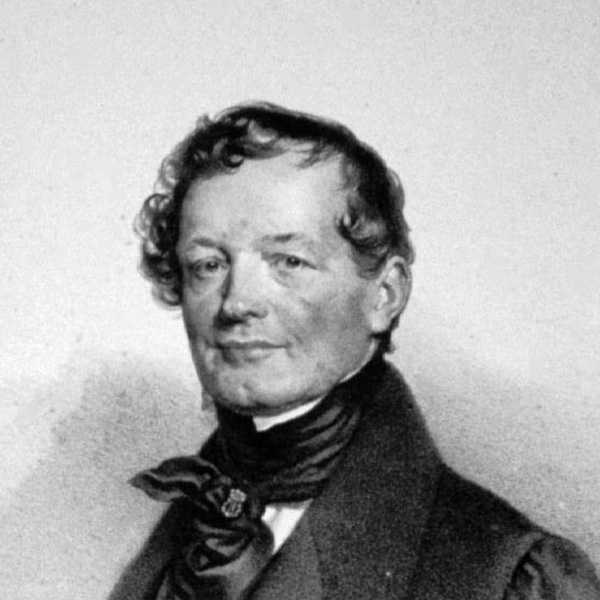
Anton Diabelli was born
Beginning of the composer’s lifetime.





The Highlander
J. Mouret
Early beginner

Danza de la Lluvia
M. Ponce
Early beginner

Étude
C. Czerny
Early beginner
Tarantella
F. Lynes
Early beginner

Watchman's song
E. Grieg
Early intermediate

Prelude
F. Mendelssohn
Late intermediate
Old Lament
U. Kay
Early intermediate

Teddy Bear
S. Bortkiewicz
Early intermediate

Waltz
M. Jaëll
Late beginner
Study
J.L. Gobbaerts
Early beginner

Vivace
F. Kuhlau
Late beginner
Aoi (Japanese Festival)
N. Ikeda
Late beginner
A free account includes access to this week’s Free Pick score.
Sign up freeBeginning of the composer’s lifetime.

The Confessions is an autobiographical book by Jean-Jacques Rousseau. In the modern era, it is often published with the title The Confessions of Jean-Jacques Rousseau in order to distinguish it from Saint Augustine's Confessions. Covering the first fifty-three years of Rousseau's life, up to 1765, it was completed in 1769, but not published until 1782, four years after Rousseau's death, even though Rousseau did read excerpts of his manuscript publicly at various salons and other meeting places.

The Magic Flute (German: Die Zauberflöte, pronounced [diː ˈtsaʊbɐˌfløːtə] ), K. 620, is an opera in two acts by Wolfgang Amadeus Mozart to a German libretto by Emanuel Schikaneder. It is a Singspiel, a popular form that included both singing and spoken dialogue. The work premiered on 30 September 1791 at Schikaneder's theatre, the Freihaus-Theater auf der Wieden in Vienna, just two months before Mozart's death. It was Mozart's last opera. It was an outstanding success from its first performances, and remains a staple of the opera repertory.

Tōshūsai Sharaku (東洲斎 写楽; Japanese pronunciation: [toː.ɕɯꜜː.sai | ɕaꜜ.ɾa.kɯ], fl. 1794–1795) was a Japanese ukiyo-e print designer, known for his portraits of kabuki actors. Neither his true name nor the dates of his birth or death are known. His active career as a woodblock artist spanned ten months; his prolific work met disapproval and his output came to an end as suddenly and mysteriously as it had begun. His work has come to be considered some of the greatest in the ukiyo-e genre.
The Argentine War of Independence (Spanish: guerra de la independencia argentina) was a set of military events from 1810 to 1825 which resulted in the consolidation of Argentina as an independent country from Spanish rule. The historiographical term encompasses battles and military feats such as the Crossing of the Andes. Formal independence was declared in 1816 by the Congress of Tucumán.

Harriet Tubman (born Araminta Ross, c. March 1822 – March 10, 1913) was an American abolitionist and social activist. After escaping slavery, Tubman made some 13 missions to rescue approximately 70 enslaved people, including her family and friends, using the network of antislavery activists and safe houses known collectively as the Underground Railroad. During the American Civil War, she served as an armed scout and spy for the Union Army. In her later years, Tubman was an activist in the movement for women's suffrage.

Ignaz (Ignace) Joseph Pleyel (French: [plɛjɛl]; German: [ˈplaɪl̩]; 18 June 1757 – 14 November 1831) was an Austrian composer, music publisher and piano builder of the Classical period. He grew up in Austria (then part of the Holy Roman Empire), and was educated there; in his mid-twenties he moved to France, and was based in France for the rest of his life.

Berthe Marie Pauline Morisot (English: mor-ee-ZOH, French: [bɛʁt mɔʁizo]; 14 January 1841 – 2 March 1895) was a French painter, printmaker and a member of the circle of painters in Paris who became known as the Impressionists.

Moby-Dick; or, The Whale is an 1851 epic novel by American writer Herman Melville. The book centers on the sailor Ishmael's narrative of the maniacal quest of Ahab, captain of the whaling ship Pequod, for vengeance against Moby Dick, the giant white sperm whale that bit off his leg on the ship's previous voyage. A contribution to the literature of the American Renaissance, Moby-Dick was published to mixed reviews, was a commercial failure, and was out of print at the time of the author's death in 1891. Its reputation as a Great American Novel was established only in the 20th century, after the 1919 centennial of its author's birth. William Faulkner said he wished he had written the book himself, and D. H. Lawrence called it "one of the strangest and most wonderful books in the world" and "the greatest book of the sea ever written". Its opening sentence, "Call me Ishmael", is among world literature's most famous.
End of the composer’s lifetime.